Architecture
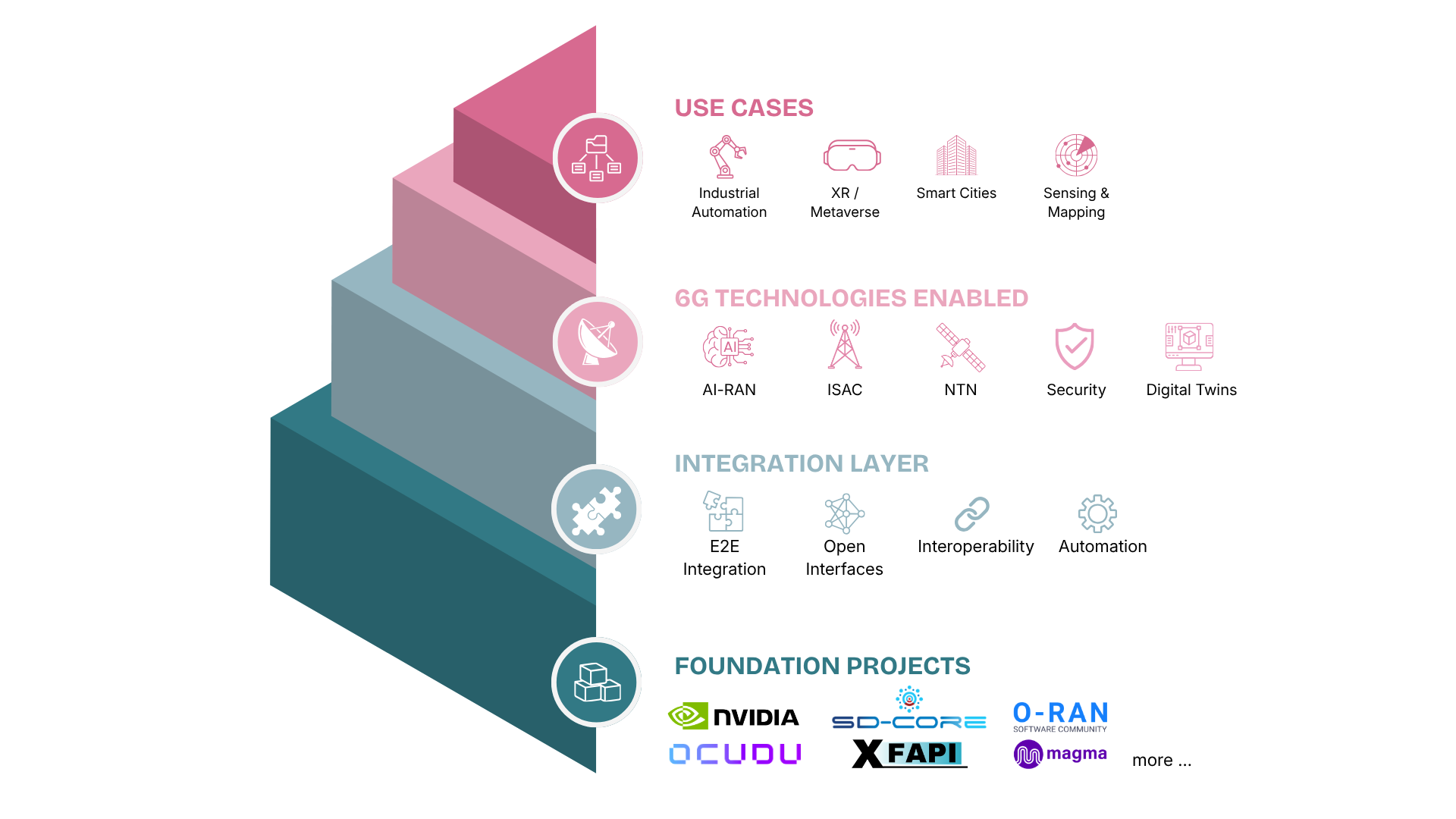
Four layers, each building on the one below. Upstream projects supply the components; the integration layer makes them interoperate; that foundation carries the 6G technologies; and the technologies enable the use cases.
The four layers
Upstream open source
The components. Radio, core, orchestration, simulation and cloud infrastructure, taken from the projects that maintain them rather than forked and diverged.
Integration layer
The part that makes them interoperate. Open interfaces, bridges such as xFAPI between independently developed L1 and L2, and the glue that turns a set of projects into one deployable stack.
6G technologies
What the integrated foundation carries: AI-RAN, ISAC, NTN, digital twins, post-quantum security, agent identity, accelerated and RISC-V compute, and automated certification.
Use cases
What the technologies enable, from industrial and robotics deployments to satellite-integrated coverage, sensing-aware environments and autonomous network operation.
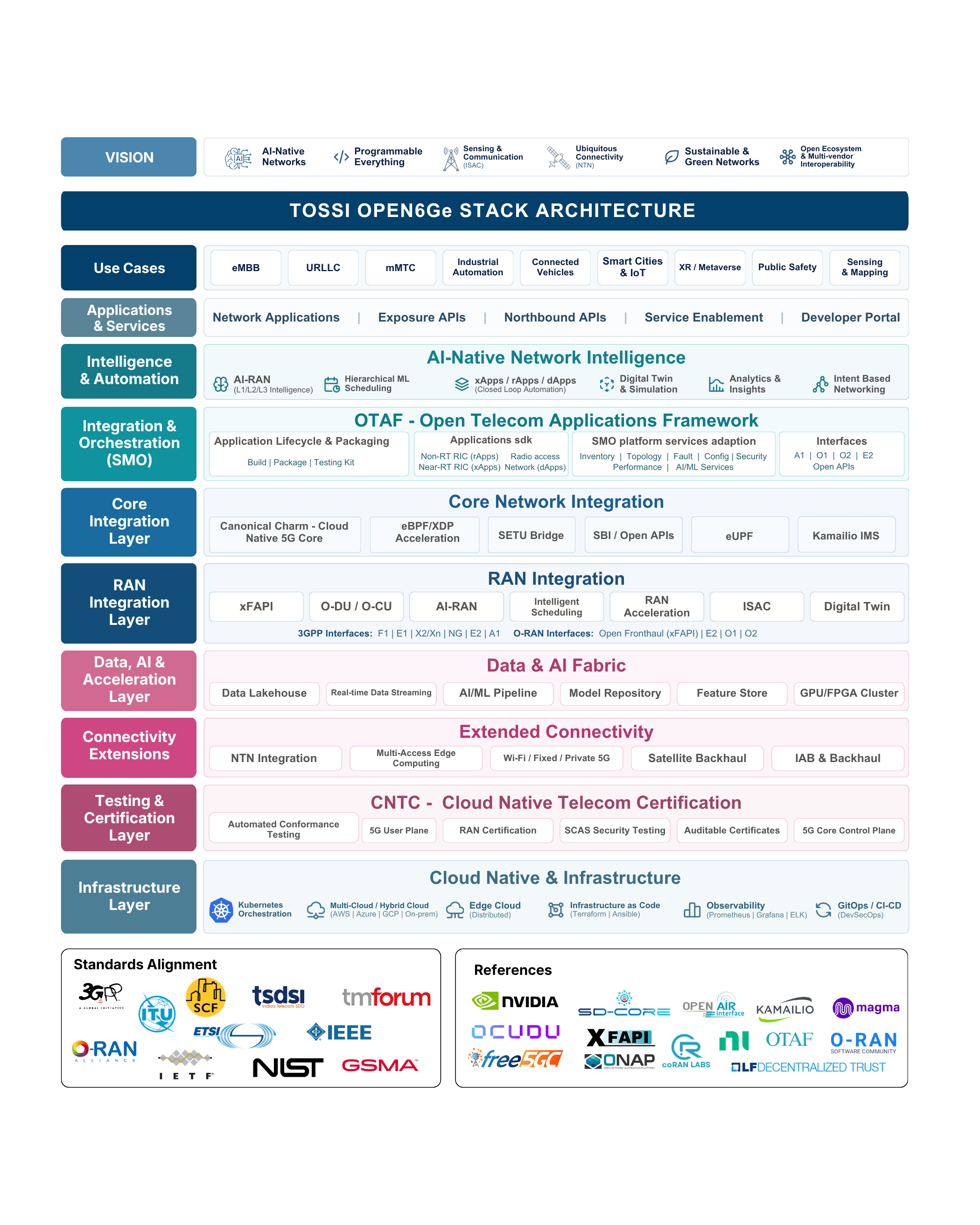
Stack layers
The same architecture seen as a layer stack, from the compute and cloud infrastructure at the bottom through to the applications and use cases at the top.